Why Two Homes on the Same Upland Block Can Follow Completely Different Historic Rules
October 1, 2026
October 1, 2026
A house inside one of Upland's nine historic districts is not automatically bound by the city's preservation rules just because it sits inside the boundary line. The district covers the block. It does not cover every house on it the same way.
Two Craftsman bungalows built the same decade, a few doors apart in the Euclid Avenue District, can carry entirely different obligations and entirely different benefits. One might be classified as a contributing structure, meaning any exterior change needs city sign-off and the owner may qualify for a substantial property tax cut. The other, altered too many times over the decades or built just outside the district's window of significance, might carry neither. A listing sheet won't tell you which is which. A drive down the street won't either.
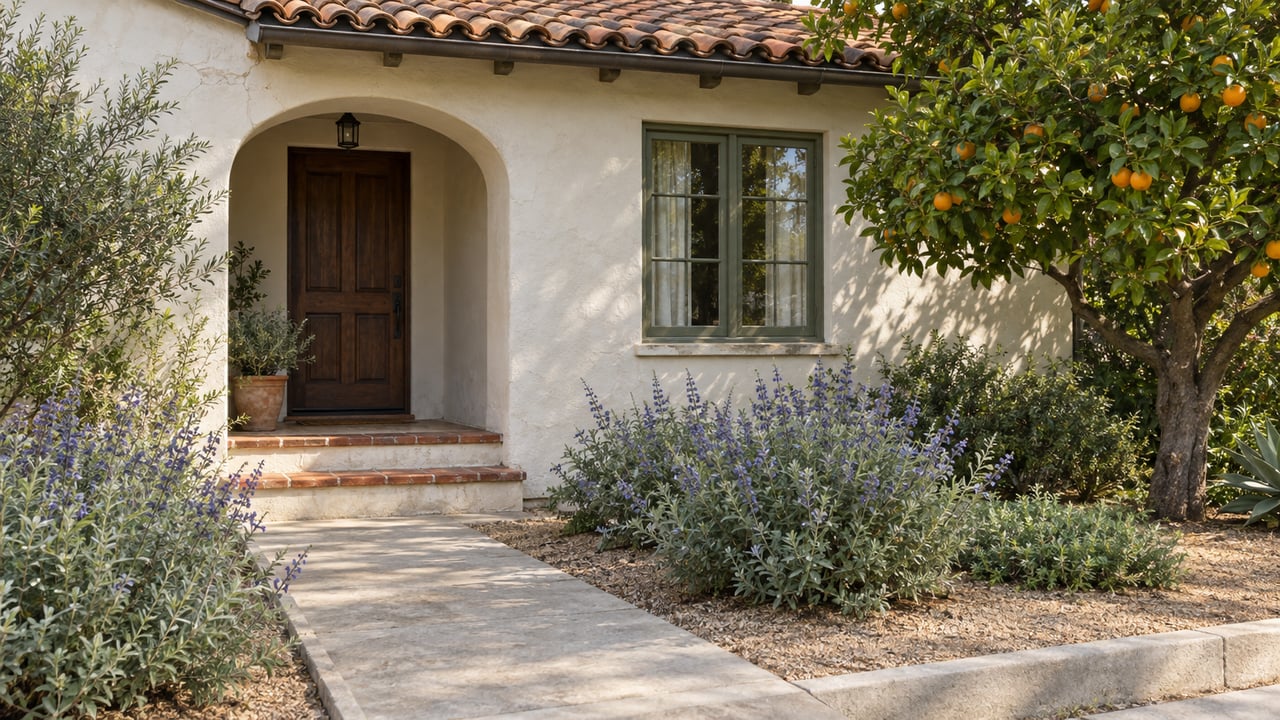
Upland maintains nine locally designated historic districts, among them Old Magnolia, Pleasant View, Victorian Row, Stowell, Civic Center East, Arrow/Laurel and the Euclid Avenue District, together holding more than 580 properties on the city's local register of historic and cultural resources. The Euclid Avenue District's period of significance runs from roughly 1895 to 1936, tracing back to the Chaffey brothers, who laid out the 200-foot boulevard in the 1880s as the spine of a citrus colony that eventually became the city itself. Walk that stretch today and you'll pass Craftsman bungalows with deep porches, Period Revival houses from the 1920s and 30s, and the occasional Victorian survivor.
But the district designation itself is a boundary drawn around a neighborhood's shared character. Inside that boundary, the city still evaluates properties individually. A structure earns "contributing" status because it reflects the architecture and period the district was created to protect. A house that's been re-sided, re-roofed, or substantially rebuilt since the period of significance may not qualify, even if it sits on the same street and looks the part from the sidewalk. Only contributing structures inside a district, plus individually landmarked properties anywhere in the city, trigger Upland's historic preservation rules.
That distinction is the whole point of this piece. It's the difference between buying a house that comes with real legal weight attached and buying one that just happens to be old.
If a home is classified as contributing, exterior alterations require a Certificate of Appropriateness from the city's Planning Division, reviewed under the city's Historic Preservation Ordinance and measured against the Secretary of the Interior's Standards for Rehabilitation. That covers things like replacing windows, adding a second story, or reroofing anything visible from the public right of way. The city's own guidance leans toward repair over replacement: deteriorated historic features should be fixed rather than swapped out, and where a feature does need replacing, the new material has to match the original in design, color and texture. Simulated materials are only an option when matching the original material isn't feasible.
What that process does not typically reach is the interior. Kitchens, bathrooms, mechanical systems and structural work that doesn't change anything visible from the street generally fall outside the Certificate of Appropriateness review. For anyone weighing a value-add purchase in one of these districts, that's the practical takeaway: contributing status constrains the outside of the house, not the inside of it. A gut renovation of a 1920s bungalow's kitchen and baths is a different conversation than replacing its front-facing windows or adding a dormer.
Contributing status isn't only a constraint. It's also the entry ticket to the Mills Act, the state program that lets a city enter into a contract with a property owner trading a commitment to preserve and maintain a historic home for a real cut in property taxes. Upland Heritage, the nonprofit that has pushed local preservation since 1989, puts the potential savings at up to 75 percent, achieved because the county assessor values the property using an income approach rather than a standard market approach, then applies whichever of three calculations comes out lowest.
The contract runs a minimum of ten years and renews automatically each year, so in practice it keeps rolling forward until either the owner or the city files a notice to let it lapse. Because the agreement attaches to the property rather than the person, it transfers to a new owner at the time of sale. A buyer who picks up a contributing home already under an active Mills Act contract inherits both sides of the deal at once: the tax savings and the maintenance obligations, without applying for either.
There's a wrinkle worth knowing before you assume every historic listing carries this benefit. Owners who have held a property for decades under California's Proposition 13 sometimes see little or no reduction from Mills Act, because the assessor is required to use whichever of the three valuations is lowest, and a long-held Prop 13 base year value can already sit below what the income approach would produce. The program tends to help most exactly the buyers who are about to reset their assessed value anyway through a purchase, which is a detail that rarely comes up until someone actually asks.
Here's where the parcel-versus-district distinction turns into something actionable. Before writing an offer on a home inside one of Upland's historic districts, two questions are worth answering separately, and neither one is answered by the district's name alone.
First, is this specific structure classified as contributing, or does it sit inside the boundary without carrying that designation. The city's Planning Division can confirm parcel-level status directly. Second, is there already a recorded Mills Act contract on title. If both answers are yes, the buyer is stepping into a real, multi-year property tax number that belongs in the affordability math before an offer goes in, not something to discover after close. If the home is contributing but has no existing contract, the design restriction is real but the tax benefit isn't automatic. Applying for one after closing means opting into a minimum decade of documented maintenance under a program that a seller or listing agent may not always think to flag, simply because it wasn't part of their own ownership experience.
Confirming this ahead of time is a matter of a records check, not a guess. It's the kind of detail that separates a house priced for its charm from a house priced for its charm and a locked-in tax advantage that will still be paying off five years from now.
The framework behind all of this traces back to specific people, not just an ordinance. Upland Heritage was founded in 1989 by Dave Stevens, a longtime resident who later served on the Upland City Council and voted the Mills Act program into local use, helping organize the city's nine historic districts before his passing in 2020. The nonprofit he helped build still awards roughly $10,000 a year in matching grants to homeowners undertaking qualifying restoration work, and its Dave Stevens Preservation Award still recognizes owners who keep up their end of these long-term maintenance commitments. The rules protecting a Craftsman bungalow on Euclid Avenue today exist because someone with a stake in the neighborhood pushed the city to write them down.
Does every home inside one of Upland's nine historic districts need a Certificate of Appropriateness before renovating? No. Only structures classified as contributing to that district's period of significance trigger the requirement. Confirm a specific parcel's status with the city's Planning Division rather than assuming it from the district boundary alone.
If a historic home already has a Mills Act contract, do I have to renew it myself? The contract transfers with the deed at sale and continues on its existing rolling term automatically. Either the new owner or the city can later file a notice of nonrenewal, which starts a wind-down of the remaining term rather than ending the contract immediately.
Can I still update a kitchen or add central air in a contributing historic home? Generally, yes. Upland's Certificate of Appropriateness process governs exterior alterations. Interior work that isn't visible from the public right of way typically falls outside that review.
Buying inside one of Upland's historic districts means doing a little more homework than a standard purchase, but it's homework with a clear payoff either way it lands. Carlos & Pat Samuelson and Associates spend a good part of their work in exactly this kind of property, pairing renovation and investment experience with the parcel-level research that tells you whether a historic listing comes with a Certificate of Appropriateness, a Mills Act contract, or both, before you decide what to offer.




Whether you're a first-time buyer, a seasoned investor, or looking to sell, you can trust Carlos and Pat to go above and beyond to achieve your goals. Your real estate journey deserves experts who care. Let Carlos and Pat Samuelson guide you to success!