Thinking about a condo or townhome in San Dimas but not sure where to start? You are not alone. Attached homes here offer lower maintenance living near parks, trails and a new rail stop, yet the market can feel tight and fast. In this guide, you will get a clear view of current prices, what to expect in local communities, how HOAs and financing really work, and a simple way to estimate your monthly cost. Let’s dive in.
Why San Dimas works for condo buyers
San Dimas sits along the eastern San Gabriel Valley with access to open space, lakes and regional attractions. You are close to Frank G. Bonelli Regional Park and Puddingstone Reservoir, plus family-friendly destinations like Raging Waters. These outdoor anchors draw steady interest for low-maintenance homes near trails and water. For local context, explore the area’s setting and amenities on the San Dimas overview from Wikipedia.
Commuting just got easier too. The Metro A Line extension opened service to the San Dimas station on September 19, 2025, improving rail access along the Foothill corridor. This added connectivity can boost demand for smaller, lock-and-leave units near the line. See coverage of the extension from LA Streetsblog.
Current market snapshot
- The overall San Dimas median sale price has hovered near the high $800Ks to about $1.0M in recent data. Different indexes can show low-to-mid $900Ks depending on methodology.
- Condo and townhome supply is modest compared with single-family homes. At many points, you may only find a handful of active listings, so be ready to act when the right fit appears.
- Typical attached-home price bands: older or smaller 2 to 3 bedroom units can start in the low $400Ks. Many updated or larger condos and townhomes trade in the mid to high $600Ks, and some reach into the $700Ks depending on size, condition and proximity to Bonelli Park and Puddingstone Lake.
- HOA dues often land around the mid $300s per month in several local communities, though packages and amenities vary. Always verify the exact fee and what it covers.
What you will find in local communities
Floor plans, size and age
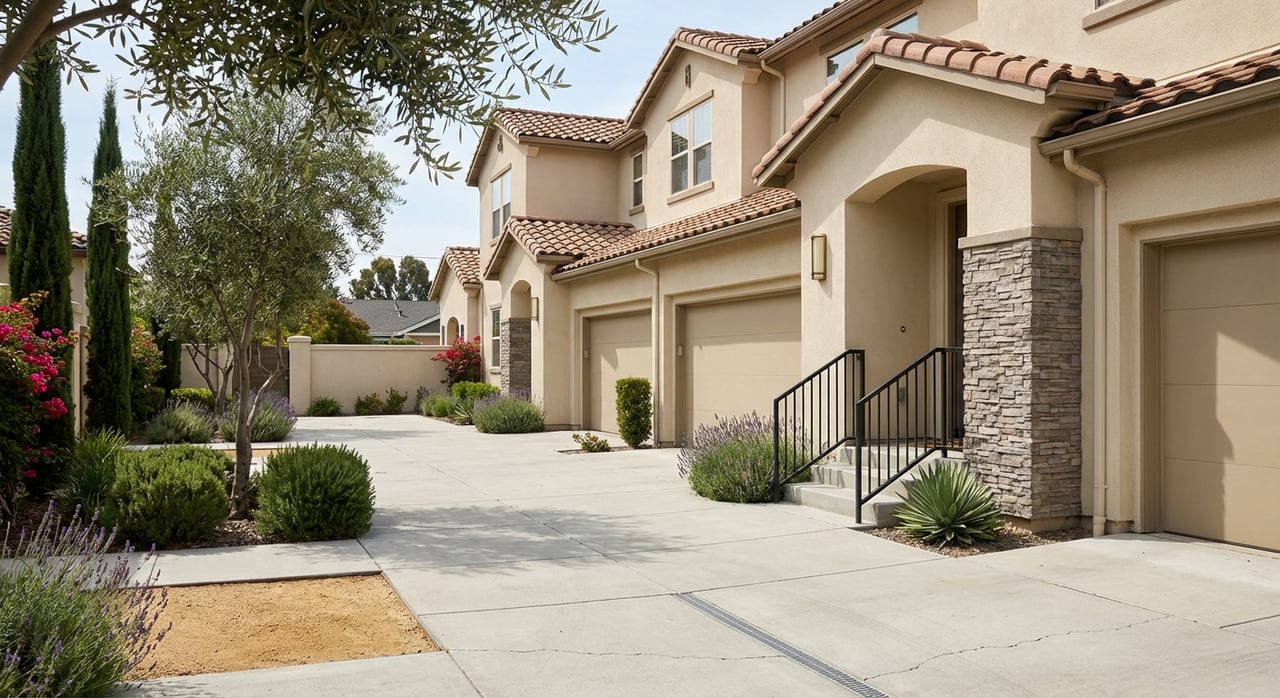
Most San Dimas condos and townhomes are 1 to 3 bedrooms and roughly 700 to 1,500 plus square feet. Many developments were built in the 1970s and 1980s. Age affects finishes, major systems and long-term maintenance planning, so reserves and upcoming projects matter when you evaluate overall cost.
Ownership types and construction
You will see two main forms: traditional condominium units in multi-story buildings and townhouse-style condominiums with direct-entry garages. Owner responsibilities vary by complex and by what the HOA’s master insurance policy covers. Always confirm boundaries of responsibility in the CC&Rs and insurance summary. For a helpful primer on how association insurance works, review this overview of community association coverage from Atlas Insurance Agency.
Amenities and parking
Common amenities include pools, spas, clubhouses, greenbelts, playgrounds and sometimes tennis or pickleball courts. Amenity level correlates with HOA dues and reserve needs. Parking ranges from carports to one or two-car private garages. If guest parking is tight or street parking has rules, check the HOA’s policy and enforcement so it fits your lifestyle.
HOA rules and disclosures you should see
California’s Davis-Stirling Act requires a robust disclosure package for buyers in common-interest communities. Before you commit, request the full HOA resale packet that includes CC&Rs, bylaws, rules, budgets, reserve disclosures, insurance summaries, and statements on assessments and any known violations. You can read the statute’s disclosure list in California Civil Code 4525.
Beyond the required items, ask for the last 12 months of board minutes to spot planned projects, early discussions of special assessments and any recurring maintenance issues. The speed of document delivery can affect escrow timelines, so order as early as possible.
Financing basics for condos and townhomes
Lenders evaluate both you and the project. A key concept is warrantable vs non-warrantable:
- Warrantable projects meet agency guidelines that allow lenders to sell loans to Fannie Mae or Freddie Mac. Factors include reserve funding, delinquency levels, litigation, commercial space share and more. See Fannie Mae’s project standards in the Selling Guide.
- Non-warrantable projects do not meet agency rules. Financing can still be possible, but usually with larger down payments or portfolio loan terms.
Ask your lender to check project eligibility early. Many use Fannie Mae’s Condo Project Manager to streamline review. Learn more about CPM on Fannie Mae’s site.
If you plan on an FHA or VA loan, verify the project’s status upfront. FHA offers full project approval and also Single-Unit Approval in some cases, each with different timelines and requirements. Review FHA condo guidance on HUD’s resource page.
Insurance made simple
Most associations carry a master policy that covers common areas and some building elements. Unit owners carry an HO-6 policy that typically covers interior improvements, personal property, liability and sometimes loss assessment. Coverage depends on how the master policy is written. Terms you may see include bare walls, single-entity and all-in. Your policy should fill the gaps. For a clear HO-6 overview, see this guide from Bankrate.
Always confirm the HOA’s Certificate of Insurance, policy deductibles and what the master policy covers vs owner responsibility so you can size your HO-6 correctly.
Property taxes and special districts
San Dimas is in Los Angeles County. Under Proposition 13, the base property tax rate is 1 percent of assessed value, plus voter-approved bonds and assessments. Effective rates commonly run about 1.1 to 1.25 percent, but every parcel is unique and some neighborhoods include special district charges. You can look up parcel-level tax details through the LA County property tax portal.
A quick buyer checklist
Use this step-by-step path to evaluate value and risk:
- Request the full HOA resale packet early. Confirm it includes CC&Rs, bylaws, rules, budgets, reserve disclosures, insurance summaries and statements about assessments and any violations. See the disclosure list in California Civil Code 4525.
- Check financing options with your lender and verify project eligibility, including FHA or VA status if relevant. Start with HUD’s guidance for condos on the HUD site.
- Review HOA financial health. Focus on reserve funding, any special assessments, the percentage of dues that are delinquent and any association loans. These items affect loan eligibility and long-term costs. See what lenders look for in Fannie Mae’s project standards.
- Confirm insurance coverage. Get the master policy summary and set your HO-6 coverage accordingly. For background on association policies, see Atlas Insurance Agency’s overview.
- Verify CC&R restrictions that matter to you, such as rental caps, pet rules, age limits, remodeling approvals, parking and short-term rental bans. The disclosure framework is detailed in California Civil Code 4525.
- Ask about litigation, contractor liens and recent capital projects. Active litigation or major deferred maintenance can limit loan options or increase owner costs. Lender concerns are outlined in Fannie Mae’s standards.
- Get a condo-specific comparative market analysis. Use recent closed sales in the same complex when possible, and compare price per square foot with HOA dues to judge total monthly value.
What will it cost each month?
Here is a simple, illustrative example using a recent local median condo listing level of $632,000. This is not a rate quote. Always seek live lender terms for accuracy.
- Purchase price: $632,000.
- Down payment: 20 percent ($126,400). Loan amount $505,600.
- Example mortgage: 30-year fixed at 6.0 percent. Principal and interest about $3,030 per month.
- Property tax estimate: about 1.1 percent. $632,000 × 1.1 percent equals about $6,952 per year, or roughly $580 per month. You can verify a specific parcel’s taxes on the LA County portal.
- HOA dues: many local communities range around $300 to $450 per month. Use the exact fee for the unit you choose.
- HO-6 condo insurance: often about $40 to $60 per month depending on coverage and deductible. See a cost breakdown from Policygenius.
In this example, the estimated monthly total is about $4,010 before utilities, any HOA pass-through utilities, parking or storage fees, and potential private mortgage insurance if your down payment is under 20 percent.
Red flags that call for deeper review
- Underfunded reserves or repeated special assessments in the last few years.
- High delinquency percentage on dues.
- Active construction or structural litigation.
- Insurance shortfalls or large master policy deductibles.
- Restrictive rental caps that could shrink the future buyer pool.
Each of these can affect financing or increase your long-term cost. Lender guidance highlights reserves, delinquency and litigation as material risk factors. For more detail, review Fannie Mae’s project standards and FHA considerations on HUD’s condo page.
Local buying tips for a tight market
- Get fully underwritten pre-approval so you can move quickly when a good unit appears.
- Set targeted alerts for your preferred complexes and be ready to tour the same day.
- If the HOA packet shows large near-term projects, consider requesting seller credits or an escrow holdback to offset upcoming costs.
- If you rely on FHA or VA, verify the complex’s eligibility before you write.
- Love the outdoors or transit? Focus on communities near Bonelli Park or the San Dimas A Line station for easy access.
- Parking matters. Confirm spaces, guest policies and any storage options before you commit.
Ready to weigh your options and run real numbers on a specific unit? Connect with Carlos & Pat Samuelson and Associates for local insight, clear negotiation strategy and steady guidance from offer to keys.
FAQs
What are typical San Dimas condo and townhome prices right now?
- Recent data shows the citywide median near the high $800Ks to around $1.0M across all home types, while many 2 to 3 bedroom condos and townhomes list from the low $400Ks to the high $600Ks or into the $700Ks depending on size, condition and location.
How does the new A Line station affect condo demand in San Dimas?
- The Metro A Line extension brought rail service to San Dimas in September 2025, which can increase interest in smaller, lower-maintenance homes near the station due to improved Foothill corridor commuting.
Which HOA documents should I review before buying a San Dimas condo?
- Ask for the full resale packet required under California Civil Code 4525, including CC&Rs, bylaws, rules, budgets, reserve disclosures, insurance summaries and statements on assessments and any known violations.
What is the difference between warrantable and non-warrantable condos?
- Warrantable projects meet agency standards, which can mean easier conventional financing. Non-warrantable projects do not and may require larger down payments or portfolio loans. Your lender can check status early.
How much are HOA dues in San Dimas condo communities?
- Many local communities fall around the mid $300s per month, but dues vary with amenities and reserves. Always confirm the exact monthly fee and what it covers.
What does an HO-6 condo insurance policy cover vs the HOA’s master policy?
- The HOA’s master policy usually covers common areas and some building elements, while your HO-6 covers interior finishes, personal property, liability and sometimes loss assessment. Verify the master policy type and deductible.
What should I budget for property taxes on a San Dimas condo?
- LA County’s base rate is 1 percent of assessed value, plus local assessments. Many effective rates land near 1.1 to 1.25 percent. Check the exact parcel on the county’s tax portal.